Before you click a single button, it helps to know what Excel actually is and why it matters. This lesson unpacks one of the most powerful tools ever created for business, study, and personal productivity: Microsoft Excel.
Learn what Excel is
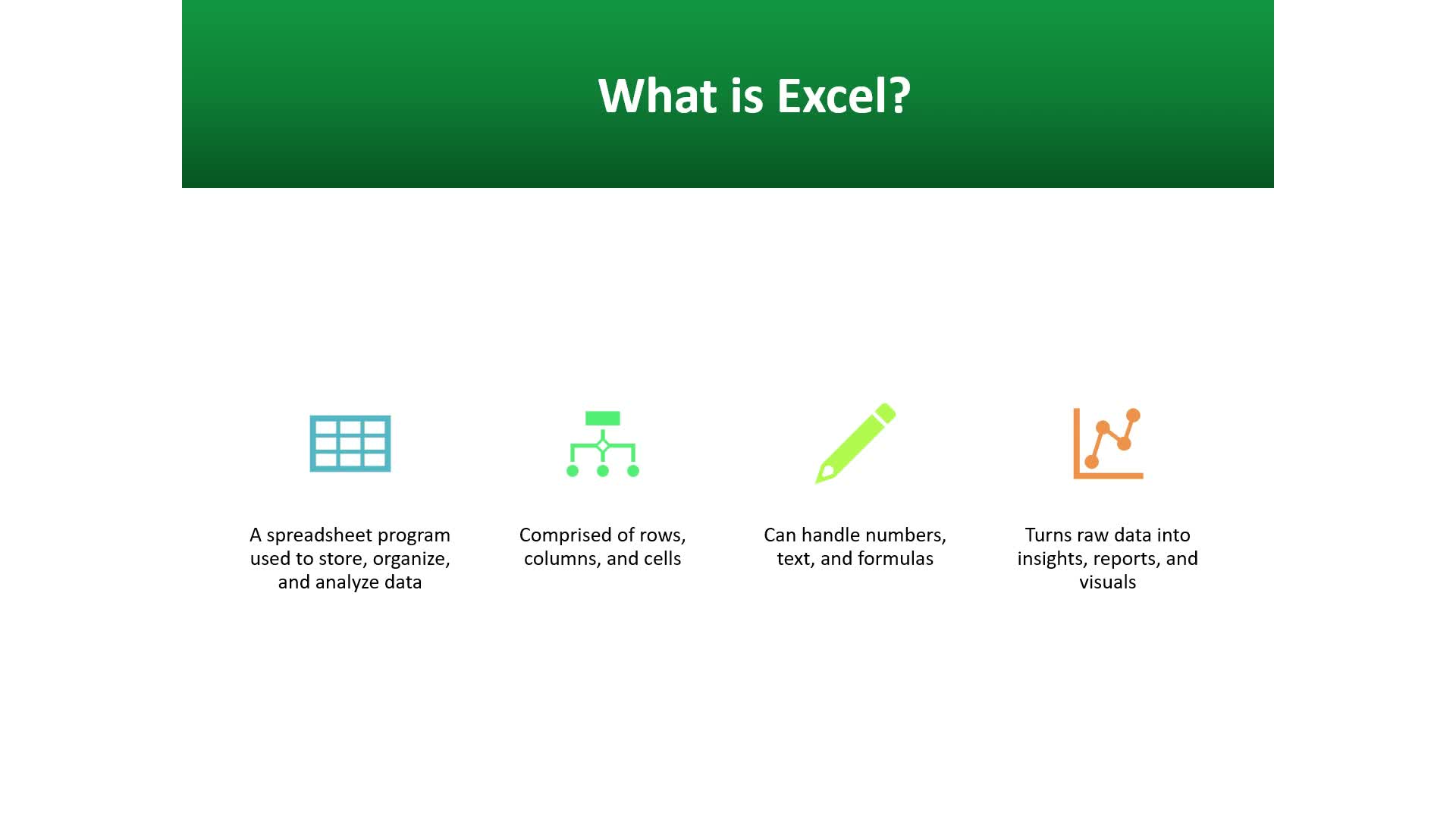
Excel is a spreadsheet program: a digital workspace of rows and columns. Where each row and column meet is a small box called a cell.
Each cell can hold data, numbers, words, or formulas that calculate automatically. When you open Excel, you see a blank grid of potential — a place to record information, analyze trends, create reports, and build models that help you make better decisions.
A small business can track income and expenses. A teacher can record grades. A project manager can plan timelines. Excel can be as simple as a shopping list, or as powerful as a business dashboard. That flexibility is what makes Excel unique.
See how Excel became essential
Before Excel came VisiCalc in the late 1970s and Lotus 1-2-3 in the 1980s. They were revolutionary: complex calculations without paper ledgers.
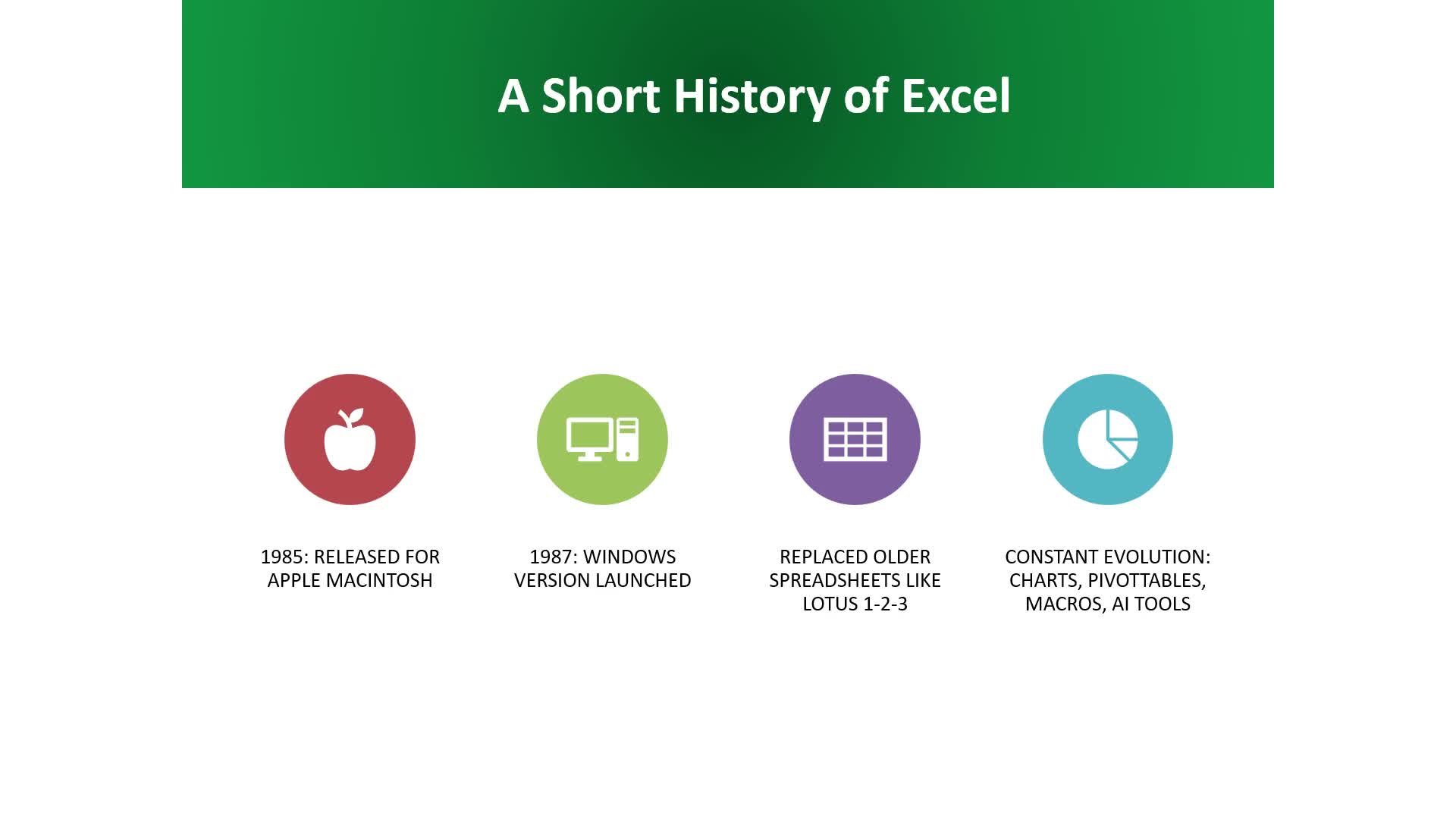
In 1985, Microsoft released the first Excel for the Apple Macintosh. Two years later, the Windows version arrived. It was faster and clearer, and soon became the world’s leading spreadsheet app.
Over the years, Microsoft added formulas and functions, charts and graphs, pivot tables for data analysis, and conditional formatting to highlight trends. Then came macros and VBA for automation, and now AI tools like Copilot in Microsoft 365. Each upgrade has made Excel more capable and more essential to modern work.
Understand why Excel is still everywhere
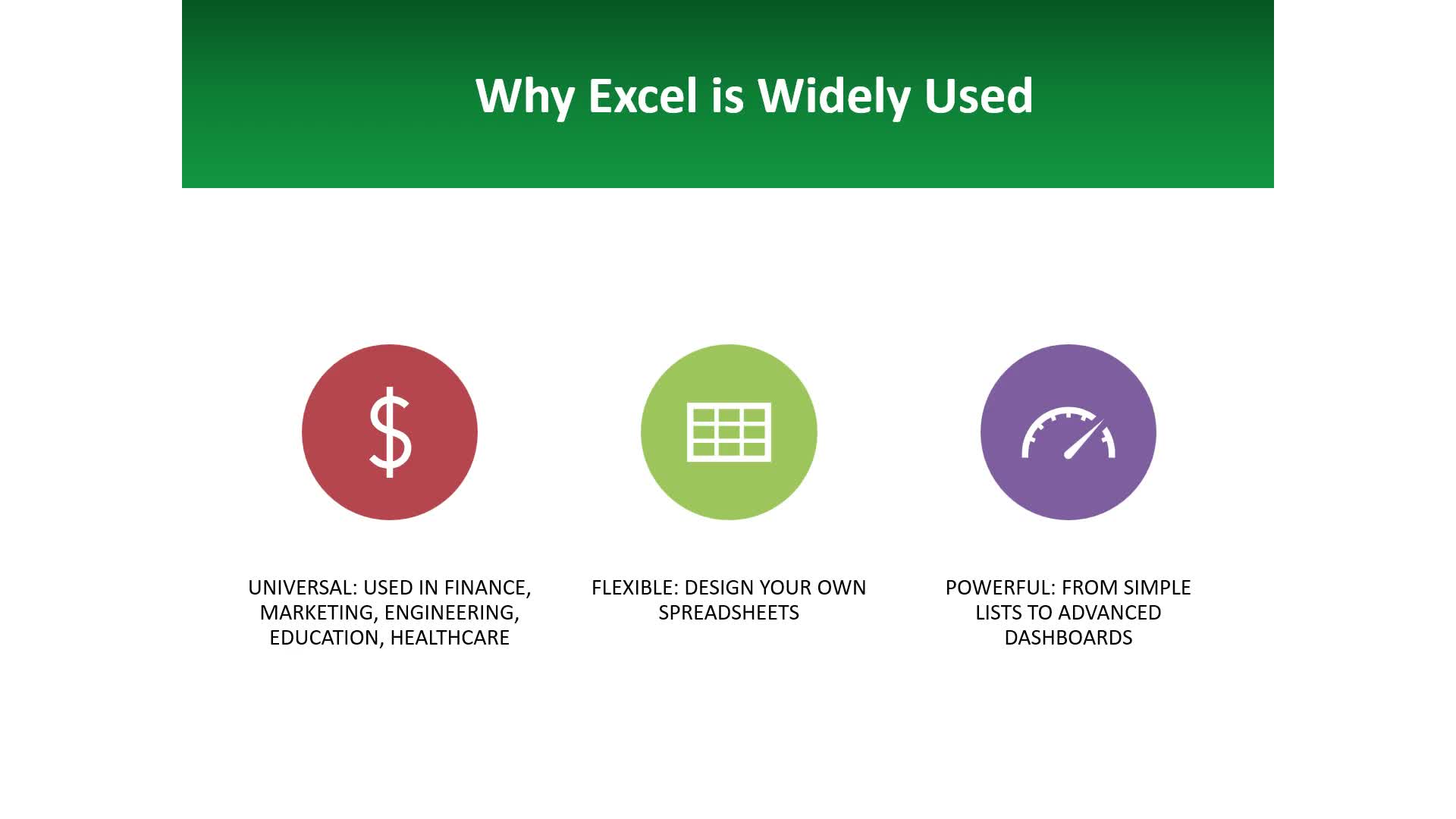
Companies still rely heavily on Excel because it is universal, flexible, and extremely powerful. It is used in finance for budgets and forecasts, in marketing for campaign data, in engineering for technical calculations, in education for class lists, in healthcare for patient data, and at home for budgeting.
Unlike rigid cloud tools, Excel lets you design your data setup from scratch. You decide how it looks, what it does, and how it behaves. That freedom makes Excel a platform for building your own mini solutions.
Excel has become the universal language of data. Almost every professional knows how to read an Excel file. It connects with Power BI, Power Automate, SharePoint, and Teams, and it has adapted to every wave of technology, from desktop to cloud to AI.
See why learning Excel pays off
Learning Excel is one of the smartest investments for your career. For students, it builds logical thinking and data literacy. For professionals, it is a must-have skill: it helps you manage data, make data-driven decisions, communicate results clearly, and automate repetitive work.
Employers consistently list Excel among the top digital skills. Even at entry level, Excel makes your CV stand out. At advanced levels, it leads to roles like data analyst or financial modeller. Most importantly, Excel gives you confidence with numbers: turning data into insights, and insights into action.
Key takeaways
- Excel is a grid of rows, columns, and cells that can hold data and auto-calculating formulas.
- It has grown since 1985 from a simple spreadsheet into an AI-powered data platform.
- It stays essential because it is universal, flexible, and connects with modern business tools.
- Excel skills build logical thinking and rank among employers’ most wanted digital skills.